
Ace Your Next Tech Interview: Inside VitableTech's Open-Source Technical Interview Questions Portal
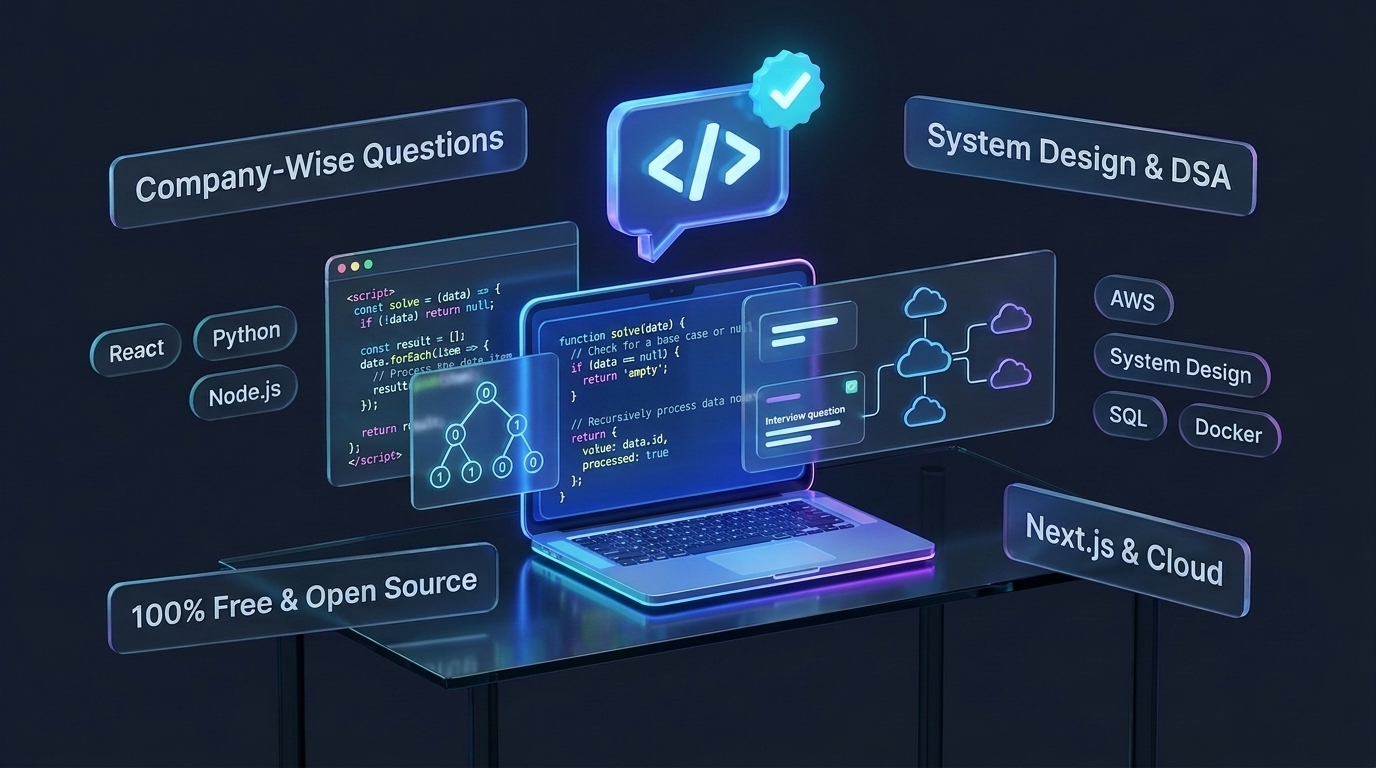
Stop grinding synthetic LeetCode brain teasers in isolation. Explore interview-questions.vitabletech.in — a community-driven repository of real-world interview questions asked across top tech companies, categorized by role, seniority, and modern technology stack.
Browse Real Technical Interview Questions Today
Practice real questions asked at companies like Bosch, Brevo, Brillio, and top product startups. Dive into React, Node.js, Python/Django, system architecture, and cloud scenarios.
1 The Shift in Technical Hiring: Why Rote LeetCode Grinding Fails
For nearly a decade, preparing for software engineering interviews meant grinding hundreds of abstract dynamic programming puzzles on LeetCode or HackerRank. Candidates memorized algorithms like Inverted Binary Trees or Dijkstra’s shortest path, only to arrive on the job and spend their days debugging SQL connection pools, optimizing React re-renders, or architecting distributed microservice retries.
In 2026, leading engineering organizations — from hyper-growth SaaS scale-ups to global tech enterprises — have drastically revamped their interview loops. Today, interviewers evaluate:
Practical Framework Architecture
Can you debug server actions, prevent waterfall requests, manage client/server state boundaries, and profile render trees in modern React and Next.js?
Data Layer & Query Optimization
Do you know how to resolve N+1 ORM query hazards, structure composite database indexes, configure read replicas, and design idempotent transactional workflows?
Real-World System Design
Can you design resilient rate-limiters, distributed background worker queues with Celery or BullMQ, and event-driven architectures with Kafka and Redis?
Security & Observability
Are you fluent in OAuth2 flows, zero-trust token handshakes, distributed tracing, structured logging, and containerized deployments with Docker & Kubernetes?
To bridge the gap between academic algorithmic puzzles and real-world engineering interviews, VitableTech created interview-questions.vitabletech.in — an open-source platform hosting actual interview questions asked in modern engineering hiring pipelines.
2 Inside the Platform: Organization, Filtering & Categorization
The biggest complaint engineers have with Reddit threads or forum posts is lack of structure. Notes are scattered across hundreds of disorganized bookmarks.
The VitableTech portal solves this with structured, multi-dimensional taxonomy:
Company-Wise Debriefs
Filter questions specifically asked by target organizations (e.g. Brevo, Bosch, Brillio, Indian unicorns, and global remote SaaS companies).
Role & Seniority Levels
Whether you are interviewing for a Junior SDE, Senior Full-Stack Engineer, Frontend Architect, or Tech Lead role, calibrate your prep to the exact seniority tier.
Tech Stack Deep-Dives
Isolate questions by your core skills: React 19, TypeScript, Node.js, Python/Django, PostgreSQL, Redis, AWS, or System Design.
Every question is cataloged with problem context, interviewer expectations, common pitfalls, and architectural reference solutions so you understand why a certain design choice is optimal.
3 Core Tech Stack Tracks & Sample Questions
Let's examine four primary technical tracks available on interview-questions.vitabletech.in:
Modern frontend rounds probe deeply into framework mechanics, state management paradigms, and rendering pipelines:
Backend technical evaluations test concurrency, ORM efficiency, and resilient API contracts:
Senior and lead engineering rounds test your ability to build fault-tolerant, horizontally scalable systems:
Questions targeting cloud infrastructure, zero-downtime deployment pipelines, and security:
4 The Open-Source Advantage: Community Driven vs. Paywalled Portals
Many commercial preparation sites lock company-specific interview debriefs behind steep monthly subscriptions ($35 to $150/month). For students, self-taught engineers, and professionals in emerging markets like India, these paywalls represent an unfair financial barrier.
VitableTech firmly believes that technical knowledge and hiring transparency should be freely accessible to all engineers. Here is how our portal compares:
| Platform Feature | VitableTech Portal | LeetCode Premium | Interviewing.io / Courses |
|---|---|---|---|
| Pricing Model | 100% Free Forever | $35/month or $159/year | $200–$1,000+ per course |
| Company-Wise Tagging | Unlocked for Everyone | Locked Behind Premium Paywall | Varies |
| Full-Stack & Framework Focus | Deep (React, Django, Node, AWS) | Mainly Pure DSA / Math | Generic System Design |
| Community Contribution | Direct Pull Requests on GitHub | Closed Platform / Forum only | Proprietary / Closed |
| Indian & Global Tech Coverage | Global MNCs + Indian Unicorns | Primarily US Big Tech | Primarily Silicon Valley |
5 How to Contribute Your Interview Experience on GitHub
The strength of VitableTech's interview portal comes from community collaboration. If you recently completed an interview round at any tech company, you can contribute your questions and help fellow developers succeed.
1 Fork and Clone the Repository
# Fork on GitHub, then clone locally
git clone https://github.com/vitabletech/Interview-Questions-Collection.git
cd Interview-Questions-Collection
2 Add Your Questions Under the Appropriate Company / Stack Folder
# Create a feature branch for your contribution
git checkout -b feature/add-acme-corp-interview-round
# Add your questions markdown file following the template
git add .
git commit -m "Add Senior Backend Engineer questions for Acme Corp"
git push origin feature/add-acme-corp-interview-round
💡 Contribution Guidelines:
Ensure questions do not contain proprietary code, client confidential data, or NDA-violating internal architecture. Focus on generic technical problem statements, system trade-offs, and conceptual depth.
6 How VitableTech Builds & Deploys World-Class Engineering Squads
At VitableTech, we don't just curate interview questions — we live and breathe high-performance software engineering every single day. Headquartered in Gwalior, India, our squads deliver enterprise web applications, AI automation pipelines, and custom SaaS platforms for clients across the USA, Japan, India, and worldwide.
Whether you are a developer looking to join our high-velocity team or an enterprise seeking a dedicated software engineering partner to architect your next digital platform, VitableTech delivers:
Full-Stack Web & SaaS Engineering
Modern ERP, CRM, and customer portal development with Next.js, React, Node.js, and Python, tailored precisely to your operational workflows.
Enterprise AI & LLM Automation
Autonomous agents, vector RAG pipelines, fine-tuned OpenAI models, and ChatGPT Business integrations engineered with private data sovereignty.
Cloud Infrastructure & DevOps
Scalable Docker and Kubernetes orchestrations on AWS, GCP, and DigitalOcean with automated CI/CD and 99.99% uptime SLAs.
Dedicated Engineering Squads
Hire vetted, senior engineering squads who take complete ownership of your backlog, sprint delivery, code reviews, and product scalability.
Have a Mission-Critical Project? Let's Build It Together.
Transform your product vision into high-impact software engineered with modern architectures, clean code, and predictable timelines.
7 Frequently Asked Questions (FAQ)
How frequently are new interview questions added?
The repository is continuously updated weekly as community members complete interview rounds and our hiring team reviews new technological trends.
Can freshers or college graduates benefit from this platform?
Absolutely. The platform includes fundamental concepts across Data Structures, JavaScript basics, SQL queries, and entry-level full-stack assignments specifically curated for Junior Engineers and Campus Placement preparation.
Are answers provided along with questions?
Yes. Key questions feature architectural explanations, code snippets, trade-off comparisons, and direct links to official documentation for deep mastery.
Where can I access the platform right now?
Visit interview-questions.vitabletech.in or star the GitHub repository at github.com/vitabletech/Interview-Questions-Collection.